
 US Dollars
Lead Test Kits: EPA Accuracy & How to Test
Sep 7th 2025
Lead Testing Kits: Comprehensive Guide
Lead exposure is a serious health concern, especially for children and pregnant women, as it can cause developmental delays, neurological damage, and kidney issues. Homes built before 1978, old pipes, or contaminated dust can harbor lead, making testing critical. This guide provides everything you need to know about lead testing kits, including how to use them, which ones are EPA-recognized, OSHA guidelines, and the gold standard for lead poisoning diagnosis. Whether you’re a homeowner, contractor, or healthcare provider, we’ll help you navigate testing options with clear, actionable advice.
What Are Lead Testing Kits?
Lead testing kits are tools designed to detect lead in paint, water, dust, or blood, helping identify potential exposure risks. They’re widely used in homes, workplaces, and clinical settings to ensure safety and regulatory compliance.
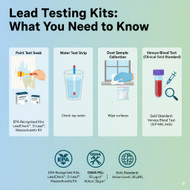
Types of Lead Testing Kits
- Paint Test Kits: Detect lead in surfaces like walls or furniture (e.g., 3M LeadCheck, D-Lead).
- Water Test Kits: Screen for lead in drinking water (e.g., LaMotte Lead Screening Kit).
- Dust Test Kits: Identify lead in household or workplace dust.
- Blood Lead Test Kits: Measure lead levels in blood, typically for clinical use (e.g., LeadCare II).
How Kits Work
Most paint and dust kits use chemical reactions:
- Sodium Sulfide: Produces a color change (often gray/black) when lead is present.
- Rhodizonate: Turns pink or red in the presence of lead (used in LeadCheck, D-Lead).
- Immunoassay: Used in water kits like LaMotte, showing lines on a strip for lead detection.
Regulatory Context
The EPA’s Renovation, Repair, and Painting (RRP) Rule requires testing for lead in pre-1978 homes during renovations. Kits must meet a negative response criterion (detecting lead at 1.0 mg/cm² or 0.5% by weight) to be EPA-recognized. Limitations include false negatives/positives and restrictions on certain surfaces (e.g., stucco).
EPA-Recognized Lead Test Kits
The EPA recognizes specific kits for RRP compliance. Below is a list of approved kits and their permitted substrates.
List of EPA-Recognized Kits
- Luxfer LeadCheck™: Tests wood, drywall, plaster, ferrous metal. Known for fast results and detecting lead chromate in colored paints.
- D-Lead® (ESCA Tech, Inc.): Tests wood, drywall, plaster, ferrous metal. Includes sampling tools and prep towels.
- State of Massachusetts Kit: Tests drywall and plaster; limited availability.
Substrates and Limitations
- Allowed Substrates: Wood, drywall, plaster, ferrous metal (e.g., steel).
- Prohibited Substrates: Stucco, non-ferrous metals (e.g., aluminum). Using kits on unlisted surfaces doesn’t meet RRP requirements.
- Note: 3M sold LeadCheck to Luxfer Magtech; only Luxfer’s version is EPA-recognized.
Where to Buy
- Strobel’s Supply (Recommended): Shop EPA-recognized kits and accessories in one place — LeadCheck™, D-Lead®, and more:
Lead Testing Kits — Strobel’s Supply - LeadCheck™ Luxfer : Available at Strobel’s Supply; also offered through authorized industrial distributors.
- D-Lead® (ESCA Tech): Available at Strobel’s Supply; also sold via ESCA Tech distributors and select hardware suppliers.
- Commonwealth of Massachusetts Kit: Availability varies by state/region; check with your state health department or specialty distributors.
Note: Always match the kit to the recognized substrates for RRP use, verify expiration/lot numbers, and keep purchase and test records for compliance.
|
Kit |
Substrates |
Cost (Approx.) |
Distributor |
|
Luxfer Magtech LeadCheck |
Wood, drywall, plaster, ferrous metal |
$35–$550 |
Strobels Supply,3M |
|
D-Lead |
Wood, drywall, plaster, ferrous metal |
$30–$70 |
Strobels Supplys |
How to Use a Lead Testing Kit
Using a lead testing kit correctly is critical for accurate results. Below are step-by-step instructions for paint and water testing, plus safety and recordkeeping tips.
Step-by-Step Guide for Paint Testing
- Prepare the Surface: Cut a small area (e.g., 1 cm²) to expose all paint layers, as lead may be in older coats.
- Activate the Kit: For LeadCheck or D-Lead, crush chemical capsules in the applicator and shake to mix reagents.
- Apply to Surface: Rub the applicator on the exposed area for 30 seconds (per manufacturer instructions).
- Interpret Results: Look for a color change (pink/red for LeadCheck; gray/black for some kits). No change suggests no lead, but test multiple spots to confirm.
- Use Control Card: Verify results with a lead-positive control card (included in some kits).
Water Testing Instructions (e.g., LaMotte)
- Collect Sample: Use a clean container to collect water (first draw from tap for highest lead risk).
- Immerse Strip: Dip the immunoassay strip into the sample as directed (e.g., LaMotte requires 8 minutes).
- Read Results: Check for one line (no lead) or two lines (lead detected at ~5 ppb).
Tips for Accurate Results
- Test multiple areas to avoid false negatives, especially on uneven surfaces.
- Follow manufacturer instructions precisely to avoid contamination.
- Avoid freezing kits, as it may affect chemical performance.
Safety and Recordkeeping
- Wear gloves to prevent contamination or exposure.
- Record kit model, test locations, and results (use forms like Wisconsin DHS’s Test Kit Documentation Form).
- Report positive results to contractors or regulators within 10 days for RRP compliance.
Visual Tip: Use a clean knife or scraper to expose paint layers. Test each component (e.g., window frame, door) separately.
OSHA Guidelines for Lead Testing
OSHA regulates lead exposure in workplaces to protect workers from health risks. Here’s a summary of relevant guidelines.
OSHA Standards Overview
- Permissible Exposure Limit (PEL): 50 µg/m³ (8-hour average).
- Action Level: 30 µg/m³, triggering monitoring and medical surveillance.
- Standard: 29 CFR 1910.1025 (General Industry Lead Standard).
Testing Requirements in Workplaces
- Air Monitoring: Measure airborne lead levels during tasks like sanding or welding.
- Surface Wipes: Test dust for lead contamination in work areas.
- Blood Lead Testing: Required for workers exposed above the action level; tests must use certified labs.
- Confirmatory Testing: Kits like LeadCheck are screening tools; positive results require lab analysis (e.g., ICP-MS, AAS).
Limitations of Kits for OSHA Compliance
Kits are not sufficient alone for OSHA compliance due to potential false negatives. Employers must use quantitative methods (XRF, lab analysis) for regulatory reporting.
Source: OSHA Lead Standard, 29 CFR 1910.1025.
Gold Standard for Lead Poisoning Testing
Diagnosing lead poisoning requires precise clinical testing, distinct from environmental testing.
Clinical Blood Testing
- Gold Standard: Venous blood lead level testing using Inductively Coupled Plasma Mass Spectrometry (ICP-MS) or Graphite Furnace Atomic Absorption Spectroscopy (AAS).
- Accuracy: Detects lead levels as low as 1 mcg/dL; CDC reference level is 5 mcg/dL for children.
- Procedure: Blood is drawn from a vein and analyzed in a certified lab.
Comparison with Point-of-Care Tests
- LeadCare II: Uses anodic stripping voltammetry (ASV) for rapid results (3 minutes) from a 50 µL fingerstick. CLIA-waived for clinic use but less precise than lab methods.
- Lab Testing: Slower (1–2 days) but more accurate; required for confirmatory diagnosis.
Linking Environmental and Clinical Testing
Positive environmental tests (paint, water) should prompt blood testing for exposed individuals, especially children.
DIY Kits vs. Professional Testing
Choosing between DIY kits and professional testing depends on your needs, budget, and regulatory requirements.
Pros and Cons of DIY Kits
- Pros: Affordable ($10–$50), easy to use, good for initial screening.
- Cons: Risk of false negatives/positives, limited substrates, not sufficient for regulatory compliance.
Benefits of Professional Testing
- XRF Testing: Non-destructive, highly accurate; costs ~$500 per home.
- Lab Analysis: Precise (e.g., $85 per paint chip); ideal for regulatory reporting.
- Certified Professionals: EPA-licensed inspectors ensure compliance and safety.
When to Call a Professional
- Positive kit results requiring confirmation.
- Complex renovations in pre-1978 homes.
- Suspected child exposure (consult pediatrician for blood testing).
|
Method |
Cost |
Accuracy |
Use Case |
|---|---|---|---|
|
DIY Kits |
$10–$50 |
Moderate |
Initial screening, DIY projects |
|
XRF Testing |
~$500/home |
High |
Comprehensive home assessment |
|
Lab Analysis |
~$85/sample |
Very High |
Regulatory compliance, precision |
Source: Consumer Reports, EPA.
Health Risks and Remediation
Lead exposure is dangerous, especially for children under 6, who can suffer irreversible developmental harm.
Why Lead Testing Matters
- Health Risks: Neurological damage, learning disabilities, kidney dysfunction.
- Sources: Paint (pre-1978 homes), water (old pipes), dust, soil.
- CDC Guidance: No safe blood lead level; test children in high-risk areas.
Safe Remediation Options
- Encapsulation: Seal lead paint with special coatings.
- Abatement: Remove lead by EPA-certified professionals (no DIY sanding/scraping).
- Water: Replace lead pipes or use certified filters.
Finding Certified Professionals
- EPA Database: Search for certified lead inspectors or risk assessors.
- National Lead Information Center: Call 1-800-424-LEAD for guidance.
Frequently Asked Questions
- What are the EPA-recommended lead test kits?
EPA recognizes three kits for RRP negative-response use (on listed substrates only): LeadCheck™ (Luxfer Magtech), D-Lead® (ESCA Tech), and the Commonwealth of Massachusetts kit. Use XRF or a lab if your surface isn’t on a kit’s list. - What are the OSHA guidelines for lead testing?
PEL: 50 µg/m³ (8-hr TWA). Action Level: 30 µg/m³. Reaching the Action Level triggers exposure monitoring and medical surveillance (including worker blood tests). Swab kits don’t prove OSHA compliance; air monitoring and controls do. - How to use a lead testing kit?
Paint: Expose all paint layers → activate swab → rub ~30s → read on time → test multiple spots → confirm with XRF/lab if unsure.
Water: Collect sample (often first-draw) → immerse strip → wait as directed (e.g., ~8 min) → read result → confirm at a certified lab if needed. - What is the gold-standard test for lead poisoning?
A venous blood lead test analyzed by a certified lab (ICP-MS or graphite furnace AAS) is the confirmatory standard. The CDC child BLRV is 3.5 µg/dL; confirm elevated capillary screens with a venous test.
Conclusion
Lead testing kits are a vital first step for identifying lead hazards in homes or workplaces. EPA-recognized kits like Luxfer Magtech LeadCheck and D-Lead offer affordable screening for paint, while water kits like LaMotte detect contamination in drinking water. Follow step-by-step instructions carefully, and always confirm positive results with professional testing (XRF or lab analysis). For workplace compliance, adhere to OSHA guidelines, and for lead poisoning diagnosis, rely on venous blood testing. Test your home today, consult EPA/CDC resources, and contact certified professionals for remediation. Stay safe and proactive!