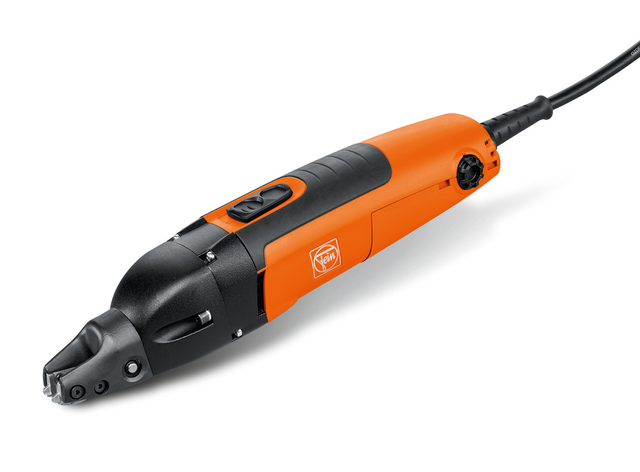
The Makita 16 Gauge Shear (model JS1602) combines power and improved ergonomics for a range of metal cutting applications. The powerful 3.3 AMP motor delivers 4,000 SPM, with a minimum cutting radius of 1-3/16” for precision applications. Additional features include a lock-on switch for continuous operation, and a built-in thickness gauge for added convenience. The JS1602 weighs only 3.4 lbs. with a small circumference barrel grip (only 2-1/4”) for added comfort. The JS1602 is engineered for cutting sheet metal and metal decking, and is ideal for a full range of applications including production sheet metal, architectural sheet metal, sheet metal fabrication, decking, roofing, signs, and more.
Features
- Lock-on slide switch for continuous operation
- Powerful 3.3 AMP motor delivers 4,000 SPM for the most demanding applications
- Smaller circumference barrel grip (only 2-1/4”) for added comfort
- CONVENIENCE - Lock-on slide switch for continuous operation; built-in thickness gauge
- COMFORT - Small circumference barrel grip (only 2-1/4”)
- Shear Blade Set (191383-0)
- INCLUDES - Wrench, shear blade set
- Hex Wrench (783201-2)
- Small circumference barrel grip (only 2-1/4”) for added comfort
- Engineered for continuous operation in 16 gauge mild steel and 18 gauge stainless steel
- Large easily replaceable blades with 8 cutting edge each
- Built-in thickness gauge for added convenience
- Refined design at only 3.4 lbs. for increased control
- Highly visible line-of-sight for precise pattern following
- Engineered to cut without the material loss in kerf typically associated with nibblers
- Engineered for cutting sheet metal and metal decking
- Engineered to cut without the material loss in kerf
- PERFORMANCE - Engineered for continuous operation in 16 gauge mild steel and 18 gauge stainless steel
- POWER - Powerful 3.3 AMP motor delivers 4,000 SPM for the most demanding applications
Prop 65
- WARNING: Some dust created by power sanding, sawing, grinding, drilling, and other construction activities contains chemicals known to the State of California to cause cancer, birth defects or other reproductive harm. Some examples of these chemicals are: lead from lead-based paints, crystalline silica from bricks and cement and other masonry products, and arsenic and chromium from chemically-treated lumber. Your risk from these exposures varies, depending on how often you do this type of work. To reduce your exposure to these chemicals: work in a well ventilated area, and work with approved safety equipment, such as those dust masks that are specially designed to filter out microscopic particles. For more information, visit www.P65warnings.ca.gov.

 US Dollars