
 US Dollars
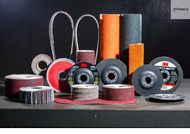
Abrasive Belts, Discs & Specialty Types Guide
Apr 1st 2026
The Professional’s Toolkit: Understanding Belts, Rolls, and Specialty Abrasives
Abrasives come in many shapes and forms, each designed for specific tasks from aggressive material removal to delicate finishing. Picking the right product saves time, extends tool life, and delivers professional results.
At Strobels Supply, we carry a wide selection of high-quality abrasives, including trusted 3M Scotch-Brite pads, sanding discs, belts, and more from leading brands like United Abrasives. This guide breaks down the main abrasive product types, their uses, key differences, and how to match grit to your application whether you're grinding welds, prepping floors, or polishing rocks.
Common Abrasive Product Types and Their Uses
Abrasives are available in versatile forms to fit hand tools, power sanders, grinders, and specialized machines.
|
Abrasive Type |
Description |
Common Uses |
|
Abrasive Belts |
Long, looped strips used with belt sanders. Ideal for large flat surfaces, contour sanding, and consistent material removal. |
Deburring metal, shaping wood, blending surfaces, heavy grinding on pipes or panels. |
|
Discs (Sanding Discs, Flap Discs, Fiber Discs) |
Circular abrasive pads used with angle grinders, orbital sanders, or random orbital tools. Flap discs provide aggressive cutting with flexibility. |
Weld blending, rust removal, surface preparation, finishing metal or wood; flap discs are excellent for contouring edges. |
|
Wheels (Grinding Wheels, Flap Wheels, Cut-Off Wheels) |
Rigid or semi-rigid abrasives used on bench grinders, angle grinders, or die grinders. |
Heavy stock removal, cutting metal, sharpening tools, and precision grinding. |
|
Sheets and Rolls |
Flexible sandpaper available in precut sheets or continuous rolls. |
Hand sanding, detail work, block sanding, or custom cutting for orbital sanders; rolls are economical for high-volume jobs. |
|
Wire Brushes |
Brushes with metal bristles (usually steel or stainless steel) used with power tools. |
Removing rust, paint, scale, or weld spatter; aggressive cleaning without removing the base material. |
Grinding Wheels vs. Coated Abrasives vs. Non-Woven Pads
These three categories cover most industrial needs, but they differ in construction and performance:
|
Feature |
Coated Abrasives |
Non-Woven Pads |
Grinding Wheels |
|
Material removal |
Medium to high |
Low to medium |
High to very high |
|
Surface finish |
Medium to very fine |
Uniform, consistent |
Coarse to medium |
|
Flexibility |
Flexible (belts, discs) |
Very flexible, conformable |
Rigid |
|
Applications |
Sanding, stock removal, finishing |
Cleaning, deburring, blending |
Precision grinding, shaping |
|
Loading resistance |
Moderate (use anti-loading treatments) |
Excellent (open structure) |
Good with proper dressing |
|
Cost |
Low to moderate |
Moderate |
Moderate to high |
Rock Polishing and Floor Sanding Abrasives
Specialized applications require progressive grit sequences for smooth, polished results.
Rock Polishing (Tumbling or Hand Sanding)
Typically uses silicon carbide or aluminum oxide grits in stages:
- Coarse (60-90 grit) — Shape and remove rough edges.
- Medium (150-220 grit) — Smooth out scratches.
- Fine (500 grit) — Refine surface.
- Polish (e.g., 8000 grit aluminum oxide or compounds) — Achieve high shine.
Tumble in rotary/vibratory tumblers with media; always progress gradually and clean between stages.
Floor Sanding
Uses drum, orbital, or edger sanders with belts, discs, or screens.
- Start coarse (20-40 grit) — Remove old finishes, level floors.
- Medium (60-100 grit) — Smooth primary scratches.
- Fine (120-180 grit) — Prep for stain/seal.
- Extra-fine (220+) — Final polish before coating.
Dust extraction is essential; match grit to floor condition to avoid over-sanding.
Choosing Abrasives by Grit and Application
Grit size determines aggressiveness: Lower numbers = coarser (faster removal, rougher finish); higher = finer (smoother, less removal).
- Heavy Stock Removal (weld grinding, rust stripping, shaping rough metal/wood): 36-80 grit. Fast cutting but leaves visible scratches — follow with finer grits.
- Medium Tasks (deburring, blending, initial sanding): 80-120 grit. Balances speed and control.
- Finishing (pre-paint prep, smoothing, polishing): 150-400+ grit. Produces smooth, even surfaces; non-woven pads shine here for scratch-free results.
Pro tip: Start coarse for efficiency, then step up grits (never skip more than one level) to refine without deep scratches. Consider material — harder metals may need tougher grains like zirconia; wood often favors aluminum oxide.
With the right abrasive form and grit, you'll work smarter and achieve better finishes. Browse our selection of 3M Scotch-Brite, sanding belts, discs, and more at Strobels Supply — or reach out for personalized recommendations on your next project!