
 US Dollars
Abrasive Sheets & Rolls: Grits, Types & Best Uses
Apr 1st 2026
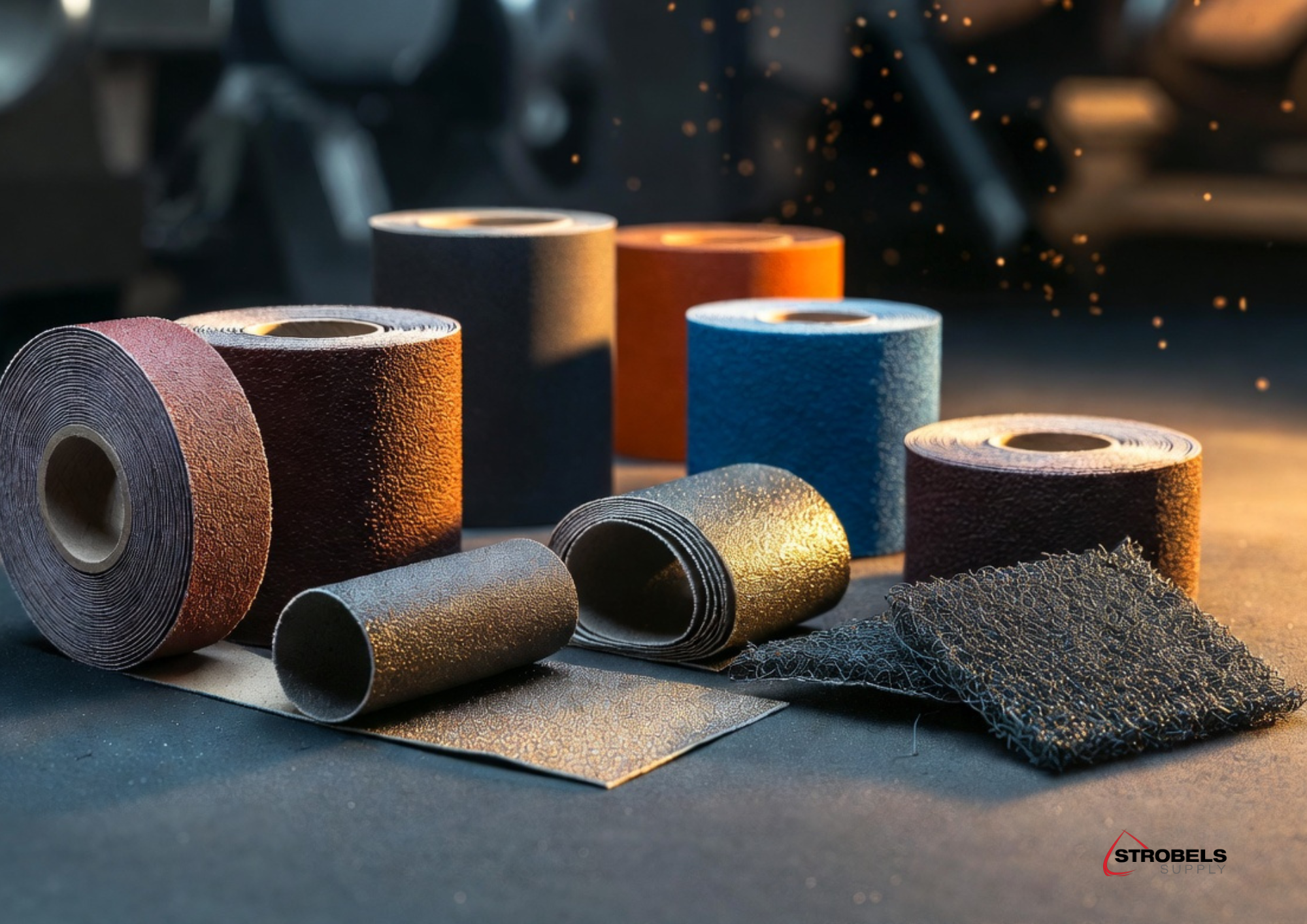
The Complete Guide to Abrasive Sheets & Rolls
Everything You Need to Know From Grit Selection to Industry Applications
Woodworking · Metalworking · Automotive · Composites · DIY
Table of Contents
Click any section to jump ahead or read straight through for a complete understanding of abrasive sheets and rolls.
- What Are Abrasive Sheets & Rolls? — Definition and Core Concepts
- Types and Formats — Sheets, Rolls, and Specialty Products Explained
- Grits, Grades & Specifications — Understanding Grit and Performance
- Applications by Material — Wood, Metal, Automotive & Composites
- Major Brands and Product Lines — Top Abrasive Manufacturers
- Safety, Toxicity & Compliance — Safe Handling and Best Practices
- Manufacturing & Technology — How Abrasives Are Made
- Selection & Buying Guide — Choosing the Right Product
- Market, Suppliers & Import/Export — Where to Buy and Source
- Related Products and Accessories — Discs, Belts & More
- Final Thoughts — Getting the Best Results from Your Abrasives
1. What Are Abrasive Sheets & Rolls?
Definition and Core Concept
Abrasive sheets and rolls are coated abrasive products flat or wound flexible substrates onto which abrasive mineral grains have been bonded with adhesive resins. Unlike grinding wheels (bonded abrasives, where grains are embedded in a solid mass), coated abrasives present the cutting grains on a surface layer, making them flexible, versatile, and suitable for both hand and machine use.
The basic construction of any abrasive sheet or roll involves three layers: the backing material (paper, cloth, film, or fiber), a make coat (the first resin layer that anchors the grains), the abrasive grains themselves, and a size coat (a second resin layer over the grains for added durability and sometimes a supersize coat for special properties like anti-loading).
Think of it this way: abrasive sheets and rolls are essentially a flexible cutting tool. The abrasive grains are tiny knives, and the backing is their handle.
Materials and Abrasive Grain Types
The abrasive grain is the heart of the product. Different minerals offer different cutting characteristics:
- Aluminum Oxide (Alumina) — The most common general-purpose abrasive. Tough, self-sharpening to a degree, and suitable for wood, metal, and painted surfaces. Standard for most workshop applications.
- Silicon Carbide — Harder and sharper than aluminum oxide but more brittle. Excellent for hard, dense materials like glass, ceramics, stone, hard metals, and wet-sanding automotive finishes.
- Zirconia Alumina — A tough, high-performance grain for aggressive metal removal. Common in industrial cloth belts and rolls for steel fabrication.
- Ceramic Alumina (e.g., 3M Cubitron II) — Engineered precision-shaped grains that stay sharp by fracturing along controlled planes. Dramatically faster cut rates and longer life on metal.
- Garnet — A natural abrasive used primarily in woodworking. Cuts cleanly and produces a fine finish, but wears faster than synthetic grains.
- Chromium Oxide / Emery — Specialty abrasives for polishing and very fine finishing applications.
Backing Types
The backing determines flexibility, durability, and suitability for wet or dry use:
|
Backing Type |
Material |
Key Properties |
Typical Use |
|
A-weight Paper |
Lightweight paper |
Most flexible, economical |
Fine hand-finishing, contours |
|
C/D-weight Paper |
Medium/heavy paper |
Balance of flex and strength |
General sanding, wood |
|
E-weight Paper |
Heavy paper |
Stiff, high-strength |
Machine use, drum sanders |
|
J-weight Cloth |
Cotton/polyester |
Very flexible, strong |
Contoured metalwork, die grinders |
|
X-weight Cloth |
Heavy cotton/poly |
Stiff, aggressive cutting |
Heavy metal removal, belts |
|
Polyester Film |
Plastic film |
Dimensionally stable, smooth |
Automotive, precision finishing |
|
Fiber (Vulcanized) |
Resin-bonded fiber |
Very stiff and tough |
Fiber discs, grinding |
|
Non-woven |
Nylon fibers |
Open, 3D structure |
Surface conditioning, scuffing |
2. Types and Formats of Abrasive Sheets & Rolls
Abrasive Sheets
Sheets are flat, pre-cut abrasive products. The standard size in North America is 9 x 11 inches, matching a quarter or third of a standard sanding block. Sheets are sold individually, in packs, or in bulk quantities. They're used for hand sanding, sanding blocks, and loaded into sheet-based orbital or random-orbital sanders.
- Standard sandpaper sheets — The classic format for hand work and block sanding. Available in every grit, grain type, and backing.
- Longboard sheets — Longer sheets (e.g., 2.75" x 17.5") for longboard sanders used in automotive bodywork to level large flat panels.
- Adhesive-backed (PSA) sheets — Pressure-sensitive adhesive on the back for tool-specific discs and block systems. No hook-and-loop required.
- Hook-and-loop (Velcro) sheets — Match to compatible random-orbital or detail sanders. Easy swap, reusable.
- Gold abrasive sheets — Typically stearated (anti-loading) aluminum oxide on film backing. Popular in automotive priming and paint prep for their resistance to clogging.
Abrasive Rolls
Rolls are continuous-length abrasive on a spool. They're cut to length as needed, making them flexible for custom sizes and reducing waste compared to fixed-size sheets.
Shop Rolls (Hand Rolls)
Shop rolls are narrow rolls — typically 1", 1.5", 2", or 3" wide — sold in lengths of 10 to 50 yards. They're the workhorse of metal fabrication shops for hand-sanding profiles, pipes, deburring edges, and blending welds. J-weight cloth backing is standard for its durability and flex.
Utility Rolls (Longboard Rolls)
Wider rolls (4" to 6") used with longboard and straight-line sanders in automotive and woodworking shops. Sold in 10-yard or 25-yard lengths. Film or stearated paper backing is common. They're cut to sheet length on the job, which can be more economical than buying pre-cut sheets.
Cartridge Rolls and Spiral Rolls
Cartridge rolls are tightly wound cylinders of abrasive cloth, mounted on a mandrel for use in die grinders or flexible shaft tools. They're designed for inside diameters, mold cavities, porting, and any internal curved surface where a flat abrasive can't reach. Spiral rolls are similar but wound at an angle for slightly different finishing action.
Non-Woven Abrasive Rolls and Sheets
Non-woven abrasives use a three-dimensional nylon fiber web impregnated with abrasive grain. They don't cut aggressively but excel at surface conditioning: removing light oxidation, scuffing between finish coats, blending, and leaving a uniform scratch pattern without high spots. Scotch-Brite (3M's brand) is the most recognized name. These come in sheets, rolls, hand pads, and unitized wheels.
|
PRO TIP — Non-Woven vs. Sandpaper: Use non-woven pads between clear-coat layers in automotive finishing for a uniform scuff without cutting through edges. They conform to shapes and won't leave hard scratch lines like sandpaper. |
Specialty Products
The abrasives market also offers several specialty formats worth knowing:
- PE-coated paper rolls — Polyethylene-coated paper backs for water-resistant applications and wet sanding in high-humidity environments.
- Gold abrasive sheet rolls — Stearated film-backed rolls that resist loading in paint, primer, and filler sanding. The stearate acts as a dry lubricant.
- Perforated / multi-hole sheets — Dust extraction holes aligned to random-orbital sanders for better dust pickup and cooler cutting.
3. Grits, Grades, and Specifications
The Grit Scale Explained
Grit number refers to the mesh size used to sort abrasive grains: the higher the number, the finer the grain and the smoother the resulting finish. Two major standards exist: FEPA (European, used globally including ISO designations with a 'P' prefix like P80, P120) and ANSI/CAMI (North American, slightly coarser at the same number). Most consumer and professional products sold in North America follow FEPA/P-grade designations.
|
Grit Range |
Classification |
Typical Applications |
|
P24–P40 |
Extra Coarse |
Heavy material removal, stripping old finishes, shaping rough lumber |
|
P50–P80 |
Coarse |
Removing mill marks, initial shaping, rough metal grinding |
|
P100–P150 |
Medium |
General wood sanding, removing P80 scratches, initial metal prep |
|
P180–P220 |
Fine |
Between-coat sanding, wood finishing prep, smoothing metal welds |
|
P240–P400 |
Very Fine |
Final wood sanding before stain, scuffing primer, surface prep |
|
P500–P1000 |
Ultra Fine |
Wet sanding paint/lacquer, removing orange peel, polishing |
|
P1200–P3000+ |
Micro Fine |
Final paint leveling, rubbing out clear coat, metal polishing |
Which Grit Yields the Smoothest Finish?
The finest available grits — P2000 to P3000 and beyond — yield the smoothest mechanical finishes achievable with coated abrasives. In automotive refinishing, P2000 wet sanding followed by a P3000 polish disc and machine compound is standard for removing minor orange peel and achieving a mirror-like clear coat. In woodworking, P320 to P400 before the final topcoat is typically the upper practical limit, as going finer can burnish wood fibers and reduce stain or finish adhesion.
Grit Selection Guide by Material
- Bare wood (rough lumber): Start P60–P80, progress P120, finish P150–P220 before stain
- Hardwood floors: P36–P60 (initial cut), P80–P100 (intermediate), P120 (final before finish)
- Metal (grinding/deburring): P36–P80 for aggressive stock removal, P120–P180 for blending
- Metal (paint prep/primer): P180–P220 to scuff bare metal before primer
- Primer sanding: P180–P220 (guide coat removal), P320–P400 (fine primer smoothing)
- Base coat / paint: P800–P1200 to sand out dust nibs or runs
- Clear coat (wet sand): P1500–P2000, finishing with P2500–P3000
- Lacquer finishing: P400 between coats, P600–P800 for final level
Open-Coat vs. Closed-Coat Abrasives
This refers to the density of abrasive grain on the backing surface. In a closed-coat product, grains cover 100% of the available surface area more grains mean more cutting action and faster material removal, but the sheet loads (fills with sanding dust) quickly on soft, resinous, or painted surfaces. Open-coat products have grains covering 50–70% of the surface, leaving space between grains for swarf (removed material) to escape. This dramatically reduces loading on wood, paints, fillers, and soft metals.
Rule of thumb: Use closed-coat for hard metals and materials that don't load. Use open-coat for wood, primer, filler, painted surfaces, and anything resinous or soft.
Standard Sheet and Roll Sizes
While custom sizes exist, the most common dimensions in the North American market are:
- Sheet: 9" x 11" (standard), 4.5" x 5.5" (quarter sheet), 3.67" x 9" (third sheet)
- Longboard sheet: 2.75" x 17.5" or 70mm x 420mm
- Shop roll widths: 1", 1-1/2", 2", 3" — in 10 or 50 yard lengths
- Utility/longboard roll widths: 4", 4-1/2", 6" — in 10 or 25 yard lengths
- Cartridge roll diameters: 1/4", 3/8", 1/2", 3/4", 1" — in 1" to 3" lengths
4. Applications by Material and Industry
Woodworking
Wood is the most forgiving material for abrasives, but it's also where selection errors are most visible. The wrong grit leaves deep scratches that show through stain. The wrong backing tears on rough surfaces. The wrong coat type loads up in seconds on resinous pine or MDF.
- Hardwoods (oak, maple, walnut): Start with P80 or P100 to remove mill marks, progress through P150 to P180, finish with P220 before applying stain or oil. Stearated (anti-loading) aluminum oxide paper is ideal.
- Softwoods (pine, spruce): More resinous — use open-coat abrasives to prevent loading. Start P80, finish P150–P180. Don't over-sand beyond P220 as it can close the grain.
- Veneer and thin surfaces: Use fine grits (P180–P220) and light pressure. Film-backed abrasives provide more consistent cut thickness, preventing burn-through.
- MDF and particleboard: Garnet or stearated aluminum oxide recommended. These materials load abrasives fast; open-coat is essential.
- Best formats: Sheets for hand work and random orbitals. Shop rolls (1"–3") for hand detail work on profiles and moldings. Drum and wide belt rolls for floor and cabinet production.
Metalworking
Metal sanding demands durability. Cloth backing (J or X weight) is standard because it withstands the heat and pressure generated during metal grinding. Grain choice matters enormously: standard aluminum oxide is fine for light work, but zirconia or ceramic alumina is far superior for production metalworking.
- Roughing/grinding (steel): Start with P36–P60 zirconia or ceramic alumina on X-weight cloth for fastest stock removal. Move to P80–P120 for intermediate blending.
- Deburring edges: 1" or 2" shop rolls, P120–P180, J-weight cloth. Run in a die grinder or by hand around the edge.
- Stainless steel finishing: Use aluminum oxide or silicon carbide on J-cloth. Stainless work-hardens; use moderate pressure and move quickly to avoid heat discoloration. Dedicated abrasives not previously used on carbon steel to prevent cross-contamination.
- Aluminum: Silicon carbide or stearated aluminum oxide to resist loading. Aluminum clogs abrasives fast; open-coat or stearated products extend life significantly.
- Surface prep for coating/welding: P180–P220 on clean, degreased metal. Achieve Ra (surface roughness) profile appropriate for the coating system.
Automotive
Automotive finishing is one of the most demanding applications for coated abrasives. The progression from bare metal to a show-quality finish involves many steps, each requiring the correct abrasive.
- Bare metal prep: P80–P150 to remove rust, old paint, and establish a profile for primer adhesion.
- Body filler shaping: P80 for initial cut and shaping; P120–P150 for final filler leveling before prime.
- Primer sanding: P180–P220 for first prime sanding (guide coat method); P320–P400 for final primer before base coat.
- Paint defect removal: P800–P1200 wet sand to cut back runs, sags, or heavy orange peel.
- Clear coat leveling: P1500–P2000 wet sand, then P2500–P3000 before machine polishing.
- Best formats: Longboard sheets and rolls for panel work. Gold film-backed sheets for primer. Flexible non-woven hand pads for between-coat scuffing. Wet/dry silicon carbide paper (film-backed) for final clear coat prep.
|
AUTOMOTIVE PRO TIP: Always wet sand clear coat with a lubricant (soapy water or dedicated sanding fluid). This prevents heat buildup that causes micro-scratches and keeps the abrasive from loading. Use a soft rubber block behind the sheet for even pressure. |
Plastics, Fiberglass, and Composites
These materials require a different mindset. They're softer than metal, can melt or smear under excessive heat, and often have surface-critical finishes that mustn't be compromised.
- Fiberglass/GRP: Start with P80–P120 for shaping or repair work. Silicon carbide on a wet/dry backing excels here. Always wear respiratory protection — glass fibers are a serious inhalation hazard.
- Carbon fiber composites: P120–P180 for surface prep; P320+ for cosmetic finishing. Waterjet-cut or laser-machined edges sometimes need only light P180–P220 cleanup. Always wet sand or use dust extraction.
- Hard plastics (acrylic, polycarbonate): P220 to P400 dry sanding, then P800–P1500 wet sanding for optical clarity. Micromesh abrasives (P1500–P12000) are available for scratch removal and polishing.
- Soft plastics: Avoid abrasives that generate heat. Light grits (P150–P220) with minimal pressure.
Who Uses Abrasive Sheets and Rolls?
The end users of abrasive sheets and rolls span virtually every trade and hobby that involves material shaping or surface finishing:
- Carpenters and cabinetmakers — Wood shaping, joinery cleanup, finish prep
- Metal fabricators and welders — Deburring, weld blending, surface prep
- Auto body technicians — The full paint refinishing process
- Aerospace and composites technicians — Surface prep on high-value assemblies
- Mold makers and toolmakers — Die work, mold polishing, tight-clearance deburring
- Boat builders and marine repair — Fiberglass and antifouling prep
- Flooring contractors — Floor sanding (wide belt and drum roll applications)
- DIY homeowners and hobbyists — Furniture restoration, auto touch-ups, craft projects
5. Major Brands and Product Lines
3M Abrasives
3M is the dominant brand in premium coated abrasives globally, with product lines covering every segment from consumer DIY to high-performance industrial finishing.
- 3M Blue Abrasive Sheet Roll — A standby in automotive and woodworking. Features a multi-hole pattern for dust extraction compatibility and a stearated aluminum oxide grain on a flexible paper or film backing. Resistant to loading on paints, primers, and softwoods. Comes in rolls that can be cut to any sheet size.
- 3M Hookit and Stikit Systems — Hookit uses a hook-and-loop attachment; Stikit uses a pressure-sensitive adhesive (PSA) backing. Both eliminate the need to staple or clamp sheets, speeding up change time on body files and blocks. Available in longboard, round, and rectangular formats.
- 3M Cubitron II — 3M's flagship performance line using engineered ceramic abrasive triangles. The precision-shaped grains fracture along controlled planes to present fresh cutting edges repeatedly, dramatically outperforming conventional abrasives in cut rate and longevity on metal. Higher upfront cost but typically lower cost-per-part. Available in sheets, rolls, discs, and belts.
- 3M Purple Clean Sanding — Anti-loading abrasive designed for sanding primer, filler, and soft materials. The stearate coating and open coat minimize loading for extended sheet life.
Other Notable Brands
- Deerfos (distributed by Production Abrasives and others) — A South Korean manufacturer producing high-quality coated abrasives positioned as a premium alternative to 3M at lower price points. Competitive on cloth-backed shop rolls and production sheet products.
- Mirka — Finnish manufacturer known for innovative net abrasives (Abranet) for near-dustless sanding. Popular in automotive refinishing and fine woodworking. Premium pricing but exceptional dust control performance.
- Klingspor — German manufacturer with a strong reputation for industrial cloth rolls, belts, and sheets. Long-running products in metal fabrication.
- Norton (Saint-Gobain) — One of the oldest abrasive manufacturers. Strong presence in both DIY and industrial segments. Norton 3X and A975 lines are well-regarded in woodworking.
- Radiac/Tyrolit — Primarily known for bonded abrasive wheels but also produce coated abrasive products, particularly for precision grinding applications.
- Indasa — Portuguese manufacturer with broad distribution, competitive pricing on paper-backed sheets and rolls.
6. Safety, Toxicity, and Compliance
Are Abrasive Sheets and Rolls Toxic?
The abrasive products themselves are not broadly toxic in use, but the dust generated during sanding almost always is — the hazard comes from the material being sanded, not the abrasive sheet itself, though the abrasive binder and grain can contribute.
- Silica dust — Crystalline silica is present in some abrasive grains (flint, quartz) and more significantly in materials being sanded such as stone, concrete, brick, and ceramics. Respirable crystalline silica (RCS) is a known carcinogen causing silicosis. OSHA's permissible exposure limit (PEL) is 50 μg/m³ as an 8-hour TWA. Wet sanding or forced-air extraction is mandatory when sanding silica-containing materials.
- Wood dust — Hardwood dusts (especially oak, beech, and walnut) are classified as carcinogens. OSHA sets a PEL of 5 mg/m³ for wood dust, though the ACGIH recommends 1 mg/m³ for hardwoods. Dust collection at the tool and an N95 or P100 respirator are minimum protections.
- Metal dust — Aluminum dust can be flammable (explosive at certain concentrations). Lead-containing surfaces (old paint, some primers) produce toxic dust during sanding. Stainless steel sanding generates hexavalent chromium, a potent carcinogen.
- Resin binders and backing coatings — Generally low hazard in finished abrasive products. Can release phenolic resin vapors at high temperatures (e.g., aggressive grinding). Consult the SDS for specific products.
SDS (Safety Data Sheet) — Key Sections to Check
Every abrasive product must have an SDS available from the manufacturer. When purchasing or using abrasives in a workplace, focus on:
- Section 2 (Hazard Identification) — GHS classifications, signal words (Warning/Danger), and hazard pictograms
- Section 8 (Exposure Controls/PPE) — Permissible exposure limits, recommended ventilation, gloves, respirator type, and eye protection
- Section 11 (Toxicological Information) — Chronic exposure data, carcinogenicity listings (IARC, NTP, OSHA)
- Section 15 (Regulatory Information) — OSHA, REACH, RoHS compliance status
OSHA and Equipment Safety Basics
While sheets and rolls used by hand have minimal mechanical hazards, power-tool use introduces additional risks:
- Angle grinder and die grinder guards — OSHA 29 CFR 1910.243 requires guards on abrasive wheels mounted to power tools. Never remove guards. Match wheel/disc speed rating (RPM) to tool rated speed.
- Speed ratings — Coated abrasive rolls and discs have a maximum operating speed. Always check and observe the speed marked on the product or package.
- Ventilation and dust extraction — Local exhaust ventilation (LEV) at the point of sanding is the most effective control. Supplied-air or PAPR respirators for high-hazard materials (lead paint, silica, hexavalent chromium).
PPE Minimum Requirements for Abrasive Operations
- Eyes: Safety glasses (ANSI Z87.1) at minimum; face shield for grinding
- Respiratory: N95 for wood and general metal dust; P100 or supplied-air for silica, lead, hexavalent chromium
- Hands: Cut-resistant gloves when handling sheets (paper cuts are real); heat-resistant gloves near grinding sparks
- Hearing: Hearing protection if tool noise exceeds 85 dB(A) over 8 hours
7. Manufacturing and Technology of Abrasives
How Coated Abrasives Are Made
The manufacturing of abrasive sheets and rolls is a sophisticated, continuous-web process with tight quality controls on grain size distribution, coat weights, and curing parameters.
- Step 1 — Backing preparation: The base material (paper, cloth, or film) is saturated and back-treated to control flexibility and resistance to moisture or heat.
- Step 2 — Make coat: A precisely metered layer of resin (typically phenolic or urea-formaldehyde) is applied to the front surface of the backing by roller coating.
- Step 3 — Grain application: Abrasive grains are dropped (gravity coat) or electrostatically oriented (electrostatic coat) onto the make coat. Electrostatic application stands grains on end, presenting sharp points upward for more aggressive cutting — this is how 'electrostatically coated' products are made.
- Step 4 — Pre-cure: The coated web passes through a low-temperature oven to partially cure the make coat and lock the grains in place.
- Step 5 — Size coat: A second, heavier resin layer is applied over the grains to bind them more firmly, control hardness, and determine the final product characteristics.
- Step 6 — Curing: Full cure in a festoon oven (a long oven where the web loops back and forth to achieve residence time without a huge footprint). This can take hours.
- Step 7 — Flexing: The cured web is mechanically flexed (bent over a series of bars) to crack the resin in a controlled pattern, giving the final product its required flexibility. This is critical — unflexed abrasive is stiff and cracks in use.
- Step 8 — Conversion: The flexed master roll is slit to width (for rolls) or cut to sheet dimensions. Holes are punched if required. PSA or hook-and-loop backing is laminated if needed.
Bonded vs. Coated Abrasives: The Key Difference
It's worth distinguishing coated abrasives (sheets, rolls, belts, discs) from bonded abrasives (grinding wheels, cut-off discs, mounted points). In bonded abrasives, grains are embedded throughout a solid matrix of vitrified ceramic, resin, or rubber — the wheel itself IS the abrasive. In coated abrasives, a single layer of grain sits on a flexible substrate. This makes coated abrasives far more versatile for surface finishing but less suitable for heavy material removal from solid stock (where grinding wheels excel).
Why Abrasive Technology Matters
The abrasives industry is larger and more technologically significant than most people realize. Surface finishing and preparation are required steps in virtually every manufactured good: automotive, aerospace, electronics, medical devices, construction, and furniture. The precision of an abrasive process determines the final surface roughness (Ra), which directly affects paint adhesion, coating durability, friction, fatigue life, and dimensional accuracy. Billions of dollars of manufacturing productivity depend on abrasive consumable performance.
Innovations like 3M's precision-shaped ceramic grains (Cubitron II technology) represent significant engineering achievements that reduce cost-per-part by increasing material removal rates and extending abrasive life not just incremental improvements.
8. Selection & Buying Guides
Sheets vs. Rolls: When to Use Which
Both formats have their place. Understanding the tradeoffs helps you choose correctly:
|
Factor |
Sheets |
Rolls |
|
Upfront cost |
Higher per unit area |
Lower — buy length in bulk |
|
Custom sizing |
Fixed sizes only |
Cut to any length you need |
|
Waste |
More waste when fitting tool |
Minimal if cut carefully |
|
Ease of use |
Ready to use |
Requires cutting/tearing |
|
Tool compatibility |
Optimized for specific tools |
Universal for block and hand |
|
Storage |
Flat, easy to organize |
Compact on spool |
|
Best for |
Machine sanders with fixed sizes |
Hand work, custom block sizes |
Selecting Abrasives by Tool
- Hand sanding (no block): Use flexible A or J-weight backing. Fold sheet in thirds for durability. Any grit from P80 to P400 depending on task.
- Sanding blocks: Sheets or cut-from-roll lengths. Use firm backing (C or D weight paper, J cloth) for flat surfaces. Flexible for contours.
- Random-orbital sander: Dedicated hook-and-loop or PSA discs. Multi-hole for dust extraction. Match hole pattern to sander.
- Longboard / straight-line sander: Longboard sheets or cut utility rolls. Stikit (PSA) or hook-and-loop depending on sander model.
- Die grinder / flexible shaft: Cartridge rolls on mandrel. Match roll diameter and length to the ID you're working in.
- Drum sander (woodworking): Wide rolls (3"–6") cut to drum width. E-weight or X-weight backing for rigidity on drum.
- Angle grinder: Fiber discs for aggressive removal; flap discs for finishing; non-woven for surface conditioning.
Buying Checklist
Use this checklist before purchasing abrasive sheets or rolls:
- Grit — What is the starting condition of the surface? What finish is required? Select grit accordingly and plan your progression.
- Grain type — Aluminum oxide for general use; ceramic or zirconia for demanding metalwork; silicon carbide for hard materials and wet sanding; non-woven for surface conditioning.
- Backing — Paper for economy and flexibility; cloth for durability and heat; film for precision and consistency; non-woven for conditioning.
- Coat type — Open-coat for soft, resinous, or painted surfaces; closed-coat for hard metals and fast material removal.
- Size and format — Sheet, roll width, cartridge roll diameter — matched to your tool and workspace.
- Stearate/anti-loading — Yes for primer, filler, paint, MDF, and soft materials. Not needed for bare metal.
- Wet or dry — Wet/dry silicon carbide for wet automotive finishing; standard paper for dry sanding only.
- Brand and price tier — See below for value guidance.
Value vs. Cost: Are Premium Abrasives Worth It?
This is where buyers often make expensive mistakes. Cheap abrasives feel inexpensive per sheet but often cost more per square foot of surface finished:
- Loading — Cheap closed-coat products load quickly on wood or paint. You use three times as many sheets and take twice as long.
- Cut rate — Cheap grain dulls fast. The first pass cuts well; by the third pass on metal you're burnishing, not cutting.
- Consistency — Premium manufacturers control grain size distribution tightly. Cheap products have inconsistent grit that leaves random deep scratches.
- For DIY / occasional use — Mid-tier products (Indasa, Klingspor basic lines, 3M SandBlaster) offer good value. You don't need Cubitron II for a weekend project.
- For production use — Premium abrasives (3M Cubitron II, Mirka Abranet, Deerfos premium cloth) pay for themselves in speed, life, and finish quality. Calculate cost per part, not cost per sheet.
The best abrasive is the one that gets you to the next grit the fastest with the least waste. That's almost never the cheapest product.
9. Market, Suppliers, and Import/Export
Finding Suppliers: Local vs. Online vs. Wholesale
Abrasive sheets and rolls are widely available through multiple channels, each with different advantages:
- Big-box home improvement stores (Home Depot, Lowe's) — Good for consumer DIY grits and common 9x11 sheets. Limited selection in cloth rolls and specialty products. Higher unit cost.
- Industrial supply houses (Grainger, MSC Industrial, Fastenal) — Full range of industrial products including cloth rolls, cartridge rolls, non-woven, and specialty grains. Competitive pricing on volume. In-person pickup or next-day delivery.
- Specialty abrasives distributors (Production Abrasives, Abrasive Resource, Klingspor Woodworking Shop) — Deep technical expertise, full product ranges including specialty imports. Often carry Deerfos, Indasa, and other quality non-3M brands at better price points.
- Online (Amazon, eBay, Zoro Tools) — Convenient for standard products. Beware of counterfeit or mislabeled products from unknown suppliers, especially for 'branded' abrasives at suspiciously low prices.
- Direct from distributor/manufacturer — For production volumes (full-case or pallet quantities), buying direct or through a distributor account offers best pricing and ensures authentic product.
Abrasive Paper Roll Manufacturers in the USA
The USA has a legacy coated abrasives manufacturing base, though much production has shifted internationally. Key players with US operations include:
- 3M (Saint Paul, MN) — Manufactures Cubitron II and premium products in the US; other products imported and converted domestically.
- Saint-Gobain / Norton Abrasives (Worcester, MA) — Long-standing US manufacturing with global operations.
- Mirka (HQ Finland, US distribution in Georgia) — US distribution and converting center.
- Many private-label and commodity abrasive rolls sold in the USA are manufactured in South Korea, China, India, and Europe and imported. Quality varies significantly; established brands (Deerfos, Sia, Indasa) from these regions can be excellent.
HS Codes and Trade Documentation for Abrasive Paper Rolls
For import/export of abrasive paper rolls, the relevant Harmonized System (HS) code classification under Chapter 68 is:
- HS 6805.10 — Abrasive powder or grain on a base of woven textile fabric only (cloth-backed)
- HS 6805.20 — Abrasive powder or grain on a base of paper or paperboard only (paper-backed)
- HS 6805.30 — Abrasive powder or grain on a base of other materials (film-backed, combination backing)
Import documentation typically requires a commercial invoice, packing list, certificate of origin (for duty preference programs like USMCA), and an importer security filing (ISF) for ocean shipments to the US. Anti-dumping duties may apply to imports from certain countries — check current CBP guidance.
OEM vs. Private-Label Abrasives
Many abrasive products sold under store brands, private labels, or regional brands are manufactured by large OEM facilities in South Korea, Taiwan, or China to buyer specifications. Quality can be excellent if the buyer specifies grain quality, coat weights, and backing quality — or poor if cost alone drives the spec. When evaluating a private-label supplier: request sample rolls, test cut rate and life against your current products, and request SDS and technical data sheets before committing to volume.
10. Related Products and Cross-Categories
Other Coated Abrasive Formats
Sheets and rolls are just two of many coated abrasive formats. A complete understanding of the category includes:
- Abrasive belts — Endless loops for belt sanders, wide belt machines, and contact wheel grinders. Available in the same backing and grain options as rolls, but in fixed loop sizes.
- Abrasive discs — Round discs for random-orbital, disc, and angle grinders. Fiber discs, flap discs, and PSA/hook-and-loop pads.
- Flap discs — Multiple overlapping abrasive flaps bonded to a backing plate. More conforming and longer-lasting than flat discs for weld blending and contour work.
- Cross pads and specialty shapes — Abrasive pads pre-shaped for specific profiles: inside radii, dovetails, and other geometric features.
- Unitized non-woven wheels and discs — Non-woven abrasive material in disc or wheel form for deburring, surface conditioning, and finishing on die grinders and bench grinders.
Non-Abrasive Products Often Purchased Together
In most supply channels, abrasive sheets and rolls are purchased alongside:
- Masking film and paper — For automotive refinishing prep, protecting adjacent surfaces during sanding and spraying.
- Dust sheets and floor protection — Construction and renovation projects.
- Sanding sponges and foam blocks — Flexible sanding supports for curved surfaces.
- Polishing compounds and pads — The next step after final abrasive finishing in automotive and woodworking.
Accessories: Holders, Dispensers, and Storage
Organizing and dispensing abrasives efficiently saves time and reduces waste:
- Sheet/roll dispensers — Wall-mounted or bench-top dispensers hold rolls upright for easy tearing or cutting to length. Prevents roll damage and contamination.
- Sanding block systems — Rubber, cork, or foam blocks for hand-holding sheets, available in flat and profiled (curved) versions. Essential for flat panel work.
- Storage boxes and dividers — Labeled flat-file boxes or drawer inserts for organizing sheets by grit. Keep abrasives dry and flat — humidity warps paper-backed products.
- Mandrels for cartridge rolls — Required to mount cartridge rolls in die grinders. Available in 1/4" and 1/8" shank diameters in multiple roll diameter sizes.
Final Thoughts: Getting the Most from Your Abrasives
Abrasive sheets and rolls may seem like a commodity, but the choices you make grain type, grit sequence, backing, coat type, and format have a real impact on the quality of your work, how long the job takes, and what it costs. Whether you're laying down a show-quality clear coat, blending a weld, or hand-finishing a piece of furniture, the right abrasive makes the work faster, cleaner, and more satisfying.
Take time to understand your material, your tool, and your target finish before grabbing whatever's on the shelf. Build a logical grit progression, don't skip steps, and invest in quality where it matters especially in production environments where speed and consistency translate directly to profitability.
If you have questions about specific applications, product recommendations, or sourcing for your region, explore our other guides or contact our technical team. We stock a full range of abrasive sheets, shop rolls, utility rolls, cartridge rolls, and specialty formats from the brands discussed in this guide.
Shop Abrasive Sheets & Rolls · Technical Support · Bulk & OEM Inquiries