
 US Dollars
Back-up Pads & Holders: Density & Types
Apr 28th 2026
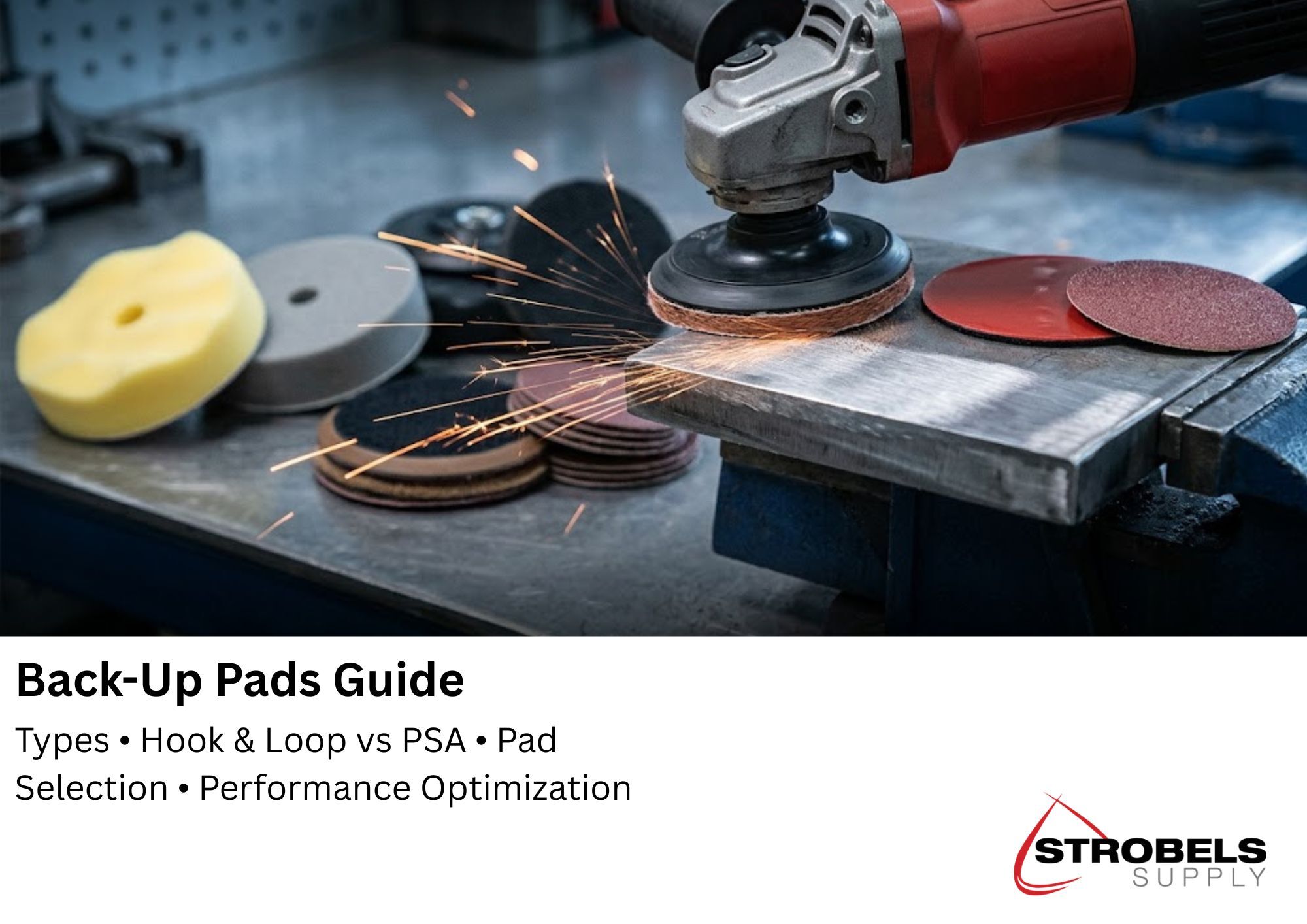
Holders & Back-Up Pads: Complete Guide to Types, Uses & Performance
Table of Contents
- Holders & Back-up Pads Overview
- Hook-and-Loop Backing Pads for Sanders & Polishers
- Machine Pad Holders for Floor & Single-Disk Machines
- Buying, Brands & Selection Guidance
- Frequently Asked Questions (FAQ)
Holders & Back-up Pads Overview
Holders and back-up pads serve as the critical interface between your power tool and the abrasive disc, sheet, or pad. They provide stability, control pressure distribution, influence cut rate and surface finish, and ensure safe, vibration-free operation. Without the right holder or back-up pad, even premium abrasives underperform, wear prematurely, or create swirl marks, gouges, or uneven results.
Role Between Tool and Abrasive Disc
The back-up pad (or pad holder) transfers rotational or orbital motion from the tool spindle to the abrasive while cushioning impact. It determines how aggressively the abrasive contacts the workpiece and how well heat and dust are managed. Proper selection directly affects tool life, operator fatigue, abrasive consumption, and final surface quality (Ra values).
Types of Back-up Pads
- Rigid (Hard) Pads: Firm foam or rubber construction. Best for flat surfaces, aggressive stock removal, and heavy grinding. They minimize flex, delivering maximum cutting power but can cause swirl marks or uneven finish on contours.
- Soft (Flexible) Pads: Thicker foam or softer density. Ideal for contour sanding, polishing, and final finishing. They conform to curves and reduce the risk of “burn-through” or aggressive cutting.
- Medium Density: Versatile all-purpose option for most production and fabrication work.
PSA vs. Hook-and-Loop (Hookit)
- PSA (Pressure Sensitive Adhesive): Discs with sticky backing that bond directly to a smooth pad. Excellent for high-pressure, flat work and single-grit runs. Discs are generally not reusable after removal.
- Hook-and-Loop (Velcro-style / Hookit): Discs with fabric loops attach to a hooked pad surface. Allows quick grit changes, multiple re-uses of discs, better dust extraction (especially with perforated “Clean Sanding” versions), and longer pad life. Preferred in modern shops for efficiency.
When You Need a Holder/Back-up Pad vs. Direct-Mount Abrasives
Use a dedicated holder or back-up pad when:
- Working with fiber discs, flap discs, or sanding discs on angle grinders or orbital sanders.
- Needing controlled pressure, conformability, or quick abrasive changes.
- Prioritizing finish quality or reducing operator fatigue.
Direct-mount abrasives (e.g., threaded arbor flap discs or quick-change discs with built-in hubs) are faster for heavy stock removal but offer less control and cushioning. Choose holders/back-up pads for precision finishing, contour work, or when switching grits frequently.
Hook-and-Loop Backing Pads for Sanders & Polishers
Sizes and Common Thread/Arbor Options
Common diameters include 4", 4-1/2", 5", 6", 7", and 8".
- 5" and 6": Most popular for random orbital sanders (ROS) in woodworking, auto body, and metal fabrication.
- 7" and larger: Common on angle grinders for heavier blending and polishing.
Thread sizes: 5/8"-11 internal (standard for angle grinders), M14-2.0, or external 5/16"-24 for certain orbital tools. Many 3M Hookit pads feature a 7/8" center hole or specific mounting configurations.
Choosing Pad Hardness for Sanding vs. Polishing
- Sanding (Stock Removal & Blending): Medium to hard pads for flat surfaces and aggressive cutting. Hard pads excel on welds, heavy rust, or leveling.
- Polishing & Fine Finishing: Soft or extra-soft foam pads to conform without cutting through clear coats or thin material. They produce swirl-free, high-gloss results.
- General Rule: Softer pads run cooler, reduce loading, and deliver finer finishes. Harder pads cut faster but increase heat and the risk of holograms or burn marks on paint.
Installing and Replacing Backing Pads
- Ensure the tool is unplugged or battery removed.
- Remove the old pad by unscrewing the retaining nut or spindle (angle grinders) or following the sander’s quick-release mechanism.
- Clean the spindle threads and any debris.
- Thread or snap the new back-up pad securely — do not overtighten.
- Test at low speed before full operation. Replace pads when hooks wear flat, foam compresses permanently, or vibration increases. Worn pads reduce abrasive life and finish quality.
Machine Pad Holders (Floor & Single-Disk Machines)
Floor Machine Pad Holders
These heavy-duty drivers and holders secure scrubbing, polishing, or sanding pads on single-disk floor machines, propane buffers, and auto-scrubbers. They typically feature a clutch plate or center-lock system for quick pad changes and secure high-RPM operation on concrete, terrazzo, wood, or tile.
Specialty Pad Holders
- Mag Pad Tool Holders: Magnetic systems for fast, tool-free pad attachment.
- “Tough Guy” / Heavy-Duty Holders: Reinforced construction for aggressive stripping or high-pressure scrubbing.
- Swivel or Universal Holders: Allow better floor contact on uneven surfaces.
How to Match Pad Holder, Pad Diameter, and Machine Type
- Measure your machine’s deck size (e.g., 17", 20", 27"). Choose a pad holder/driver slightly smaller than the deck (common: 19" driver for 20" machines).
- Match clutch plate style (e.g., Center-Lok, standard clutch) to your machine brand (Tennant, Advance, Clarke, etc.).
- For auto-scrubbers: Select low-profile holders compatible with solution tanks and squeegees.
- Propane machines: Use high-RPM-rated holders with strong centering pins.
Always verify RPM rating and pad diameter compatibility to prevent vibration, pad fly-off, or machine damage.
Buying, Brands & Selection Guidance
3M Holders & Back-up Pads Overview
3M leads the industry with its Hookit™ system (including Clean Sanding versions with dust extraction holes). Key series include medium, firm, and extra-hard density pads for 4-1/2" to 8" applications. 3M pads are engineered for durability, consistent performance, and compatibility with their Regalite, Cubitron II, and Scotch-Brite abrasives. They also offer conversion pads for retrofitting floor edgers to hook-and-loop systems.
Other Brands and Generic Options
- Mirka: High-quality hook-and-loop pads known for excellent dust extraction and longevity in automotive and woodworking.
- Klingspor: Robust options for industrial grinding.
- Generic industrial suppliers provide cost-effective alternatives for high-volume or less critical applications.
Where to Buy
For professional-grade selection, documented performance, and expert support, industrial suppliers like Strobel’s Supply are the best choice. Retail options (Amazon, Home Depot, Lowe’s, Walmart, Grainger) work for occasional use but may lack the full range of densities, thread options, or heavy-duty floor machine holders.
Frequently Asked Questions (FAQ)
Are Holders & Back-up Pads Required?
They are essential for most disc-based sanding, grinding, and polishing processes. Direct-mount abrasives are exceptions, but holders improve safety, control, and results in nearly every case. Using the wrong pad can void warranties, increase vibration-related injuries, or cause abrasive failure.
Can They Be Used Across Different Tools?
Only if thread/arbor sizes and RPM ratings match. Never mix hook-and-loop pads with PSA systems or use floor machine holders on handheld tools.
What is the difference between PSA and hook-and-loop backing pads?
PSA uses adhesive for a permanent bond ideal for single-grit, high-pressure jobs. Hook-and-loop allows quick changes and disc re-use, with better dust extraction and longer pad life. Hook-and-loop is generally preferred for multi-step finishing.
How do I choose the right hardness for my backing pad?
Hard/medium for aggressive sanding and flat surfaces; soft for contours, polishing, and fine finishes. Medium density is the most versatile starting point for most users.
Can I use a hook-and-loop pad with PSA discs?
No. The systems are incompatible. PSA discs require a smooth-faced pad; hook-and-loop discs require a hooked surface.
How often should I replace my backing pad?
Replace when hooks are worn flat, foam is permanently compressed, or you notice increased vibration or poor disc adhesion. Inspect before every heavy-use shift.
Are 3M Hookit pads worth the premium price?
Yes — for professionals. They offer superior dust extraction, consistent density, and longer overall system life when paired with 3M abrasives.
What size pad holder do I need for my 20" floor buffer?
Typically a 19" or 20" driver with the correct clutch plate for your machine model. Always confirm with the manufacturer’s specifications.
Can I use the same back-up pad for both sanding and polishing?
Technically yes, but results improve dramatically when you dedicate pads: harder pads for sanding, softer foam pads for polishing to avoid cross-contamination and swirl marks.
Where can I buy quality 3M holders, Mirka pads, and floor machine drivers?
Strobel’s Supply stocks a wide range of premium holders, back-up pads, and floor machine accessories from 3M and other trusted brands, with expert guidance for your specific tools and applications.
Looking for high-quality holders, back-up pads, Hookit systems, floor machine drivers, and the full range of abrasive accessories?
Strobel’s Supply is your trusted source for 3M Hookit backing pads, conversion pads, floor pad holders, and compatible abrasives. Whether you run orbital sanders, angle grinders, or commercial floor machines, we carry the right solutions for superior performance and finish quality.
Browse the complete Holders & Back-up Pads selection today:
https://www.strobelssupply.com/products/industrial-tools-and-accessories-/holders-and-back-up-pads/
Or explore the full abrasives section:
https://www.strobelssupply.com/products/abrasives/
Need help selecting the perfect backing pad or floor machine holder for your operation? Contact the abrasives experts at Strobel’s Supply we’re ready to help you maximize productivity and achieve professional results every time.
This guide is for educational purposes. Always follow tool and pad manufacturer RPM ratings, safety instructions, and your facility’s PPE requirements.